
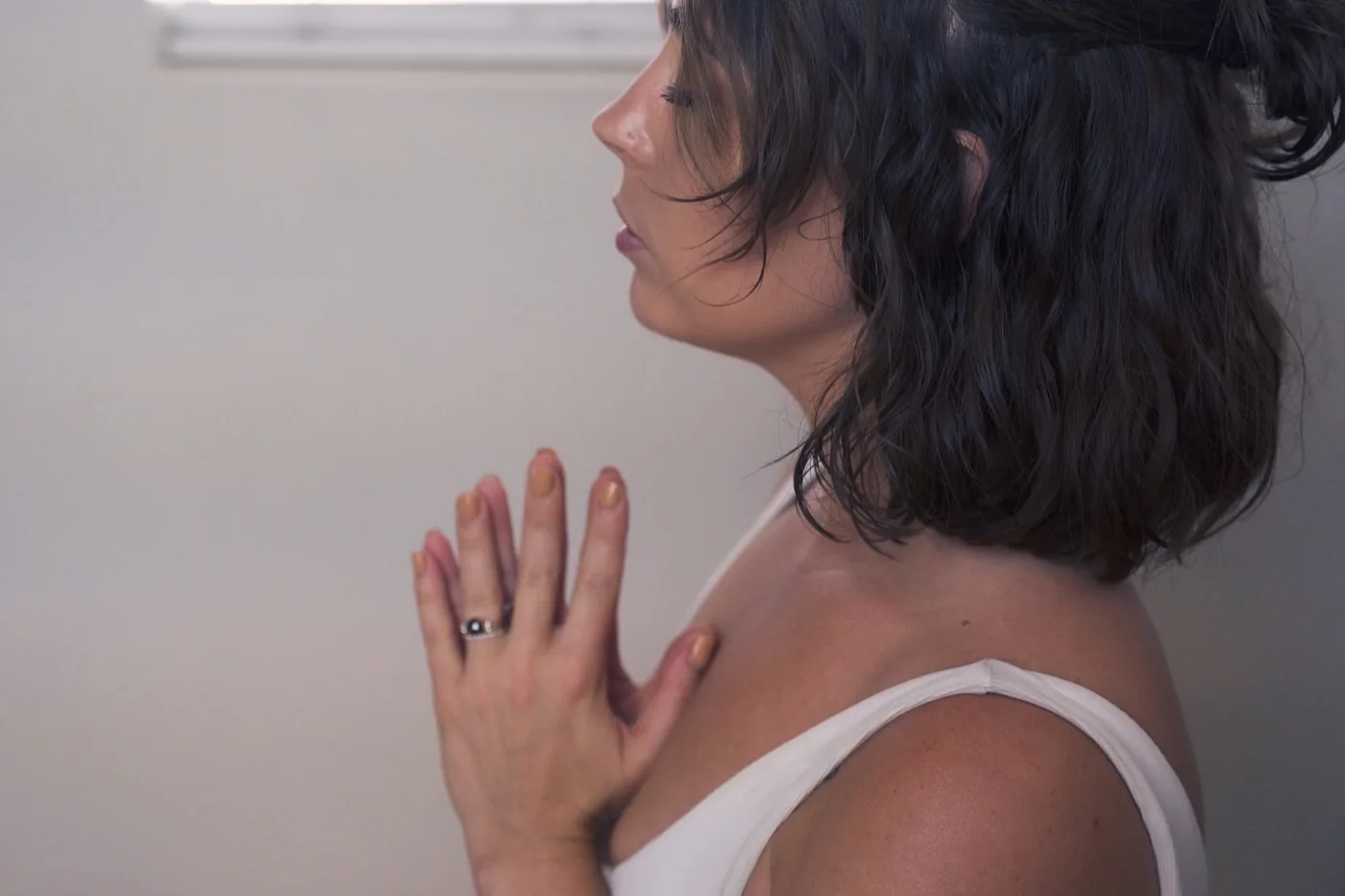
Most people leave a Reiki Level 1 weekend genuinely lit up. They practice every day for a week or two. Then a Tuesday goes sideways, the hands do not go on, and a few months later the attunement is somewhere in the back of the closet with the certificate.
If that is you, nothing has gone wrong. A reiki self practice does not usually fail for lack of discipline. It fails because it was designed for a version of your life that does not exist, the one with forty-five quiet minutes and a candle. This is about building the other kind, the one that survives an ordinary week.
What a reiki self practice actually is
Level 1 trains you to give Reiki to yourself. That is the whole scope, and it is not a lesser version of the work. You are not yet trained to treat other people. That comes at Level 2, along with distance work and the sacred symbols. Knowing where that line sits is part of practicing with integrity, and it also takes the pressure off. You have one person to care for right now, and you live inside them.
So the structure is simple. You put your hands on your own body and let it run, long enough to notice something. Everything else is scaffolding.
Start with your hands, not with a plan
The foundation treatment handed down through Takata gives you four positions on the torso and three on the head. Torso first: below the ribs at the stomach and spleen, then the liver side, then across the belly, then low at the hips. Head: over the eyes, the sides of the head, then the throat and neck.
Takata called the front of the torso the main factory of the body and taught students to spend about half the treatment time there. That one instruction fixes most beginner sessions, because the instinct is to go straight to the head and stay there.
Hold each position until the flow in your hands settles and ebbs. Some positions want two minutes. Some want thirty seconds. Your hands will tell you before your watch does. If you want the full picture of what the training weekend covers, we wrote it out hour by hour in what you actually learn in Reiki Level 1.
The three pillars give the session a shape
When people say they do not know how to begin, what they usually mean is that they do not know how to open and close. The traditional shape solves that:
- Gassho. Two hands coming together at the heart. You are not doing anything yet. You are arriving.
- Reiji-ho. The hands move up so the thumbs rest at the brow, and you ask where to go. Then you listen instead of deciding.
- Chiryo. Treatment. Hands go on, and you let the energy run.
That is a complete session even when the middle of it lasts four minutes. The ritual is not decoration. It is what tells your nervous system the practice has started and, just as usefully, that it has ended.
Five honest minutes beat forty-five imaginary ones
Here is the design change that makes a practice stick. Pick a time that already exists in your day instead of one you are hoping to create. Hands on the belly before you get out of bed, or on your own heart in the parked car before you walk into the building. At night, hands over the eyes for about as long as one song lasts.
Energy work is a relationship, and relationships are built by showing up often rather than impressively. Five minutes a day for a month will teach you more about your own energy than one perfect hour ever will.
What to do when you do not feel anything
This is the most common reason a new practice quietly dies. You put your hands on, you wait for the heat or the tingling, you get nothing, and you decide it is not working for you.
Two things help here. Temperature is information, not a grade: heat often shows up where energy is pouring in, and cool often shows up where something is settling. Neither one is the good one. And most of us start out with one or two ways of noticing rather than the whole set. Some people see or hear something. Plenty just feel a shift in the body they cannot put words to. Pay attention to what you do notice instead of auditing yourself for what you think you are supposed to feel.
Our post on common Reiki sensations walks through what tends to come up and what it usually points to.
The half of the practice that has nothing to do with your hands
The Reiki Ideals are the other half, and they are the part people skip. They open with a promise small enough to actually keep: just for today. Not forever. Today I will set down the worry. Today I will work honestly and be kind to living things.
Say one of them in the morning while your hands are already on you. It costs nothing, and it gives the practice somewhere to land once your hands come off.
Keep the practice honest about what it is
Reiki is not medical care and it does not replace it. What a steady self practice tends to offer is more ordinary than a cure and more useful than you would guess: a few minutes a day where nothing is being asked of you, and a slowly growing sense of what your own body feels like when it settles. What shows up past that varies a lot from one person to the next. Some notice very little for weeks and then a lot at once.
Your practice will be sacred because you are sacred, not because you got the sequence right.
When you are ready for the next thing
Somewhere in a practice that is genuinely running, the hands start reaching for other people. A partner with a headache. A friend having a hard week. That pull is the signal, and the answer to it is Reiki Level 2, which is where you are trained to work on others, to send at a distance, and to use the sacred symbols. You will usually know you are ready before anyone tells you.
Not attuned yet? Level 1 is the door in, and we teach it in person in Los Angeles over two days, next on October 17 and 18 (details here). If what you want is not more training but someone alongside you while you rebuild, that is what 1:1 coaching is for.