
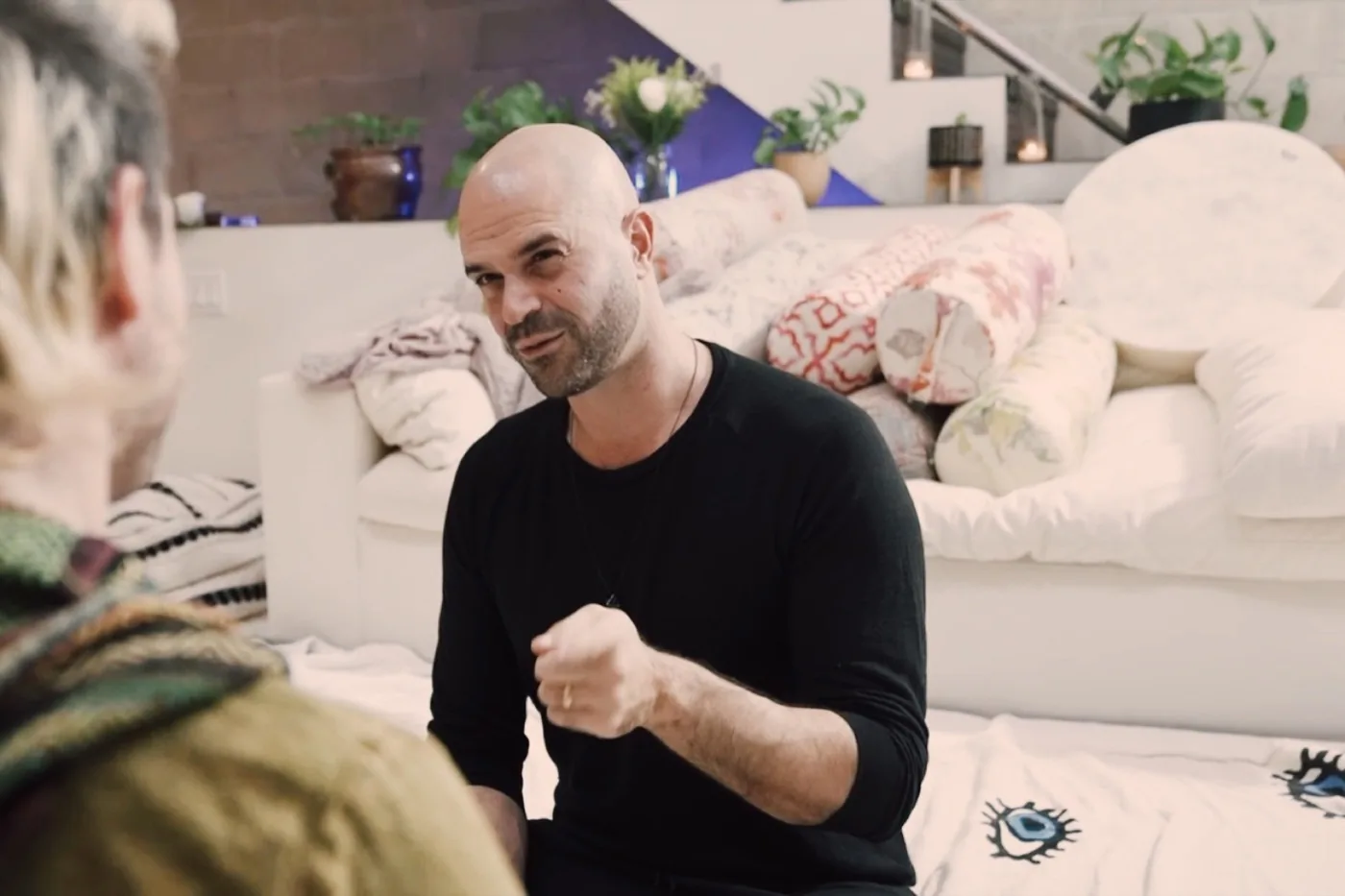
The job title does not tell you much. A holistic life coach might be someone who helps you build a morning routine, someone who reads your birth chart, or someone with years of training and a serious practice behind them. So when people ask what does a holistic life coach do, a list of values is not a useful answer. A description of the actual hour is.
Here is ours, plainly.
What does a holistic life coach do, in plain terms
A coach helps you close the gap between what you understand about yourself and what you actually live.
Most people who come to us are not confused. They can explain their own patterns fluently. They have read the books, done the therapy, and can name the thing they keep doing. The understanding just has not changed the behavior.
What makes the work holistic is that it does not treat your mind as the only place where change happens. A session can move between conversation, breath, movement, and hands-on energy work depending on what the week actually needs. Nothing is scripted.
What actually happens in a session
Ours run 90 minutes, once a week. We usually start with the body, because someone who just came off a call and drove across town is not really in the room yet. Ten minutes of breath or movement changes what is available to talk about.
From there it goes where it needs to go. Some weeks that is almost entirely conversation. Some weeks it becomes Reiki or sound work on the table, because talking has clearly run its course and the useful thing is to stop narrating and let the body finish the sentence.
Jaime and Yonatan both hold this work, and a given session can draw on movement, breathwork, coaching conversation, Reiki, or sound. Everything except sound healing works over Zoom, which is how a good number of our clients do it.
What a holistic life coach does not do
This part matters more than the list of things we do.
We are not licensed therapists and this is not therapy. We do not diagnose, we do not treat mental health conditions, and we do not work with active trauma the way a trained trauma therapist does. Coaching starts from the premise that you are functional and want to build something. Therapy is often the better door when the past is still running the present. If you are in crisis in the United States, call or text 988 for the Suicide and Crisis Lifeline.
None of this is medical care either. Reiki and breathwork are not treatments for a condition. They help a nervous system settle, which is a real and fairly modest thing.
We wrote a longer piece on how to tell which door you need: coaching vs therapy. Plenty of people do both at the same time, and that is often the right answer.
Why the body is in the room at all
Because insight alone has a poor track record, and you already know that from your own life. You have understood something clearly, promised yourself it would be different, and then watched the same pattern run again a month later.
The body is where the pattern is held, so it has to be part of the room where the pattern changes. That is not a metaphor about energy. It is the practical reason a coaching session here might have you lying on a mat breathing instead of sitting in a chair explaining.
What twelve weeks looks like
Our container is twelve weekly sessions. We landed on that length because shorter runs tend to end right at the point where something is finally shifting, and a new pattern needs to be repeated across enough ordinary weeks to hold on its own.
The early weeks are mostly about getting honest and getting regulated. The middle is where the pattern stops being something you describe and starts showing up in the room instead. The last stretch is integration, the unglamorous work of making the new thing survive contact with an ordinary week.
Most people keep going after the first twelve weeks. Nothing obligates them to.
How to tell whether a coach is any good
A few things worth watching for, whoever you end up working with.
- They tell you when you are not a fit. Someone who says yes to everyone is running a business, not a practice.
- They are specific about scope. Vagueness about what they do and do not handle is the clearest warning sign there is.
- They do not promise outcomes on a timeline. Anyone guaranteeing what your life looks like in ninety days is selling you something.
- You leave with something you can use, not only something you felt.
- They have their own practice and their own support. People who only ever give tend to run dry.
That last one applies to anyone who takes care of people for a living, not only coaches. More on that in how to give without burning out.
Is this what you actually need?
Probably yes if you are functioning well by most measures and quietly aware that your life is not matching what you actually value. Probably yes if you have done a great deal of understanding and want it to finally land somewhere.
Probably not if what you need right now is treatment, or if you are hoping someone will hand you a plan to follow. We do not do that. The work is collaborative and it asks something of you every week.
The honest way to find out is a conversation. The free discovery call runs an hour and nobody is watching the clock. You get a read on how we work. We are listening for whether we can genuinely help, and when the answer is no we say so and tell you where we would send you instead. Either way you leave with at least one thing you can use, and there is no version of this where you get talked into anything.
If you want the fuller picture of how the work is structured first, that lives on our holistic coaching page.