
Hardly anyone looks for a relationship coach because things are going well. They come about someone: a partner who has gone quiet, or a mother who still knows exactly which button to press.
So the honest answer to "what does a relationship coach do?" starts there. A relationship coach helps you change how you show up in the relationships that matter to you, beginning with the one person in them you can change.
What a relationship coach does, in plain terms
A relationship coach works with you on the patterns that keep repeating between you and the people who matter to you. The argument that changes topic every week and is somehow always the same argument. The thing you need and have never asked for, because asking feels like too much.
The work isn't about deciding who is right. A good coach isn't on your side against the other person, and isn't on theirs either. We get curious about your half of the pattern, since your half is the part you can move.
And relationship means more than romance here. People come to us about a marriage or a parent, and sometimes about a change or a loss that has quietly rearranged how they relate to everyone around them.
Why the work keeps coming back to you
Yonatan puts it this way: people come to us about a certain relationship in their lives, and the work turns them toward the relationship they have with themselves.
That can sound like a polite way of saying the problem is you. It isn't. Most patterns between two people are kept running by both of them, and a lot of what drives your side happens before you've had a single thought about it. Your chest tightens at a certain tone of voice. An old rule about not making a fuss kicks in. Once you can feel that happening in real time, you get a choice you didn't have before.
Very often, one person doing their own work is what changes the whole relationship. You don't need anyone else to agree to anything for that to begin. If you've ever wondered whether the people closest to you are showing you something about yourself, we wrote about that in are our partners a solution, or simply a mirror.
What actually happens in a session
With us, sessions are 90 minutes and weekly, and we start with twelve weeks. It happens in our Los Angeles studio, on Zoom, or a mix of the two.
Much of it is conversation. You tell us what happened this week, and we slow down the moment where it turned. What did you feel right before you said that? What did you want from them, underneath the words?
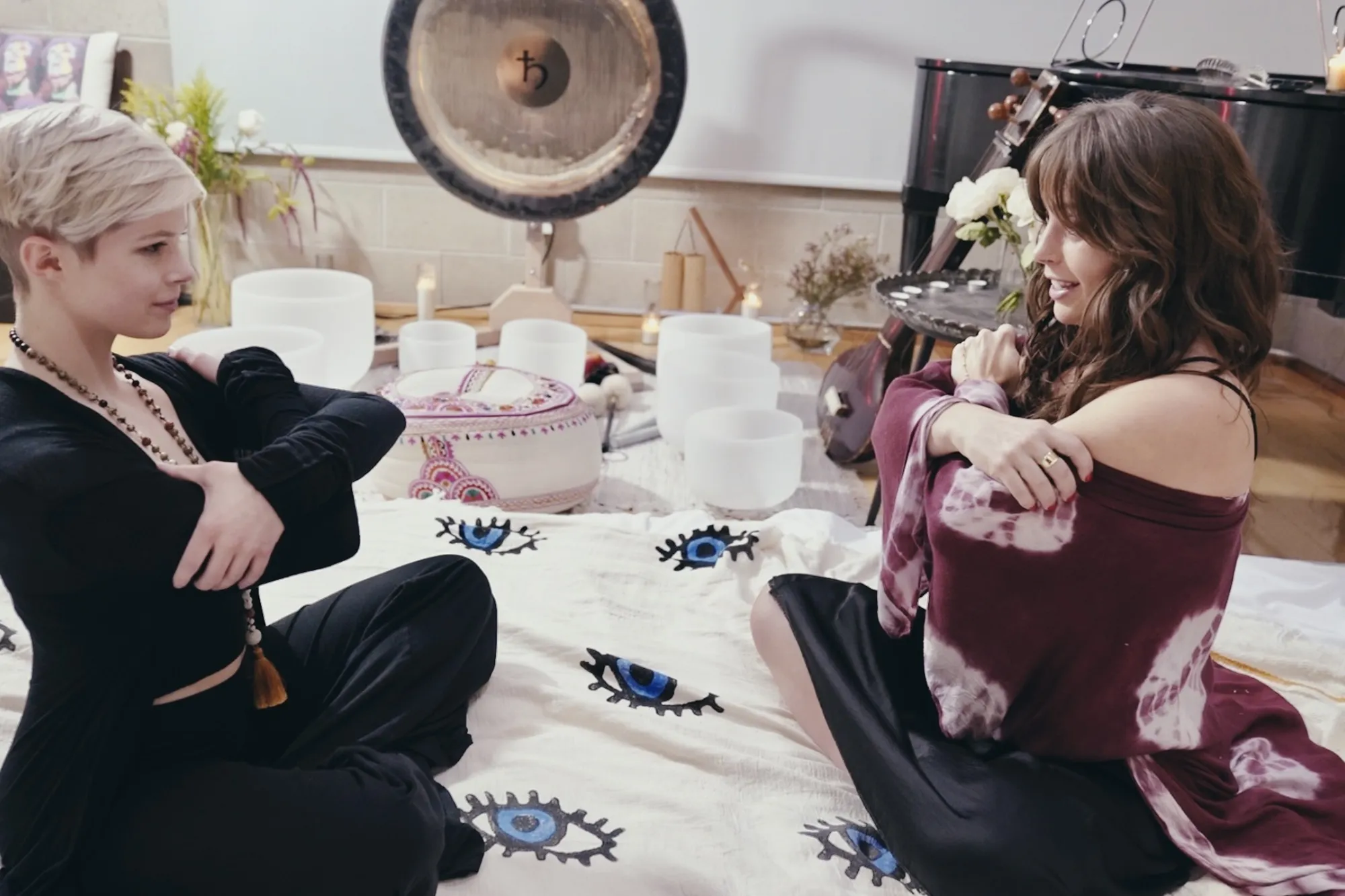
Relationship patterns live in the body as much as in the story, so a session can also include breath or movement, and some weeks it includes Reiki or sound. People regularly find they can say the honest thing once their nervous system has settled, when five minutes earlier they couldn't get near it.
Then you practice. You try the hard sentence out loud in the room, where nothing is at stake, and take it home. Between sessions is where the change shows up, usually in small ways at first, like a conversation that goes differently or a boundary you hold without an apology attached.
Does your partner need to come too?
No. You can start on your own, and you never have to bring anyone else in. It's your work, and it counts.
When a couple does want to work with us, it looks a little different from what people usually picture. We're a married coaching team, so one of us coaches you and the other coaches your partner, in separate sessions. That keeps the hour from turning into the arguments you saved up all week, and gives each of you room to look at your own side. More on how that works on our couples coaching page.
Relationship coach or couples therapist?
Coaching isn't therapy, and relationship coaching isn't marriage counseling. Therapists are licensed to diagnose and treat, and that matters when the past is still running the present or when someone's mental health needs clinical care. Coaching is non-clinical. We make room for your history, and the focus stays on how you want to show up from here.
Many people do both at once, and it's often a good combination. With your permission, we're glad to coordinate with your therapist. If you're still weighing which door to walk through, we wrote about that in do I need a therapist or a coach.
Coaching is also not the right place if you don't feel safe in your relationship. If you're afraid of your partner or there is abuse of any kind, please reach out to the National Domestic Violence Hotline at 1-800-799-7233 or thehotline.org. If you're in crisis in the United States, call or text 988.
Signs a relationship coach could help
None of these mean something is wrong with you. They're just the places people tend to be standing when they reach out.
- You keep having the same fight in different words.
- You can explain your pattern clearly, and it still runs.
- You tend to disappear inside relationships and only notice later how much you went along with. (We wrote about self-abandonment here.)
- A move, a breakup, a loss or a new baby has changed how you relate to the people around you.
- You'd like your next relationship to start differently from how the last one went.
- You've been the one holding everything together for years, and you're tired.
How to choose a relationship coach
Whoever you work with, ask what happens in a session and listen for something specific. Vague answers about transformation don't tell you much.
It's worth asking how they handle the moment you want them to agree that the other person is the problem. A good coach will be kind about it and still won't take sides. Notice, too, whether they're clear about what they don't work with.
Then pay attention to how the first call feels. You should come away feeling heard rather than sold to. Jaime is a Relationship and Life Coach and a Somatic Facilitator. Yonatan brings thirty years as a musician and a real interest in how people relate to their own experience. We'd still rather you find the right fit than pick us. You can read more about how we work on our relationship and life coaching page, and if you want the wider picture of body-based coaching, see what a holistic life coach actually does.
Where to start
The simplest first step is a conversation. The discovery call is free and runs about an hour. You tell us what's happening and who it's with, and we tell you honestly whether we can help. If we're not the right fit, we'll say so and point you somewhere better.